- Types of Ecosystems
- Terrestrial Ecosystems
- Tundra
- Forest Ecosystems
- Grassland Ecosystems
- Desert Ecosystem
- Aquatic Ecosystems
- Classification by Salinity: The Defining Chemical Factor
- Classification by Habitat Zone: Where Life Resides
- Role of phytoplankton
- Factors Limiting Productivity
- Eutrophication
- Wetland Ecosystem
- Ramsar Convention
- Lakes
- Estuary
- Lagoon
- Mangroves
- Conclusion
Our planet thrives on a delicate and intricate network of interactions between living organisms and their non-living environment. These systems, known as ecosystems, are the functional units of the biosphere, cycling nutrients and flowing with energy. To understand our world is to understand these diverse realms, from the frozen tundra to the sunlit canopies of the rainforest and the nutrient-rich waters of an estuary. Let’s journey through the major types of ecosystems that sustain life.
Types of Ecosystems
Ecosystems are broadly divided into two major categories: terrestrial (land-based) and aquatic (water-based). Each is governed by a unique set of physical and chemical parameters that shape the life within it.
Terrestrial Ecosystems
Land-based ecosystems, or biomes, are vast regions characterized by their specific climate and dominant vegetation.
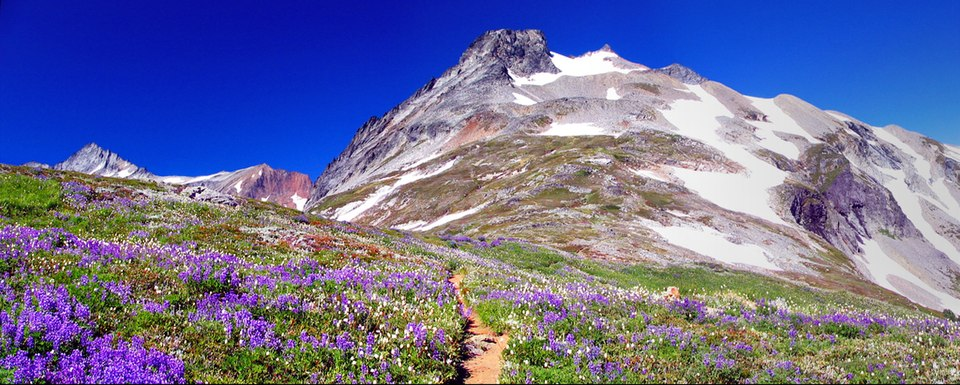
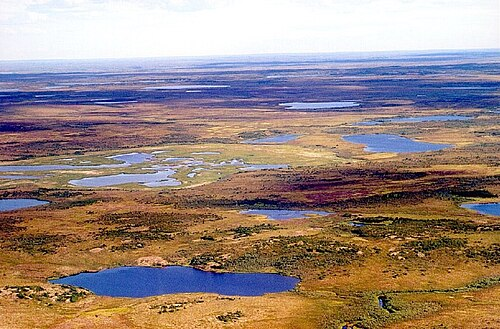
1. Tundra
- The Tundra is a treeless expanse defined by permafrost, a permanently frozen layer of soil.
- It exists in two forms: Arctic (at high latitudes) and Alpine (at high altitudes).
- Vegetation is sparse, dominated by low-growing forms like mosses, lichens, and the crucial reindeer moss, which provides pasturage for reindeer.
- Animals like the arctic fox, polar bear, and musk ox exhibit remarkable adaptations to the cold, such as large body sizes and small extremities to minimize heat loss.
2. Forest Ecosystems
Forests are complex, multi-layered ecosystems.
- Taiga (Boreal Forest): This evergreen coniferous forest has the lowest productivity among all forest types. Its harsh climate features thin, acidic, and nutrient-poor soils called podzols. The slow decomposition of conifer needles and poor drainage contribute to this low fertility. The landscape is dominated by resilient species like spruce, fir, and pine.
- Temperate Deciduous Forest: Found in regions with distinct seasons, these forests are characterized by trees like oak, elm, and ash that shed their leaves in the cold season—a crucial adaptation to survive winter frost. Their soils are more fertile than those of the taiga.
- Temperate Rainforest: A rarer biome, these forests are found on coastlines with high rainfall. They are home to massive coniferous trees like the Douglas fir and Western red cedar. A key feature is the abundance of epiphytes—plants like mosses and lichens that grow harmlessly on other trees.
- Tropical Deciduous Forest (Monsoon Forest): These forests are “drought-deciduous,” meaning their trees, including valuable species like teak, sal, and sandalwood, shed their leaves during the dry season to conserve water.
- Tropical Rainforest: Often called the “lungs of the Earth,” these ecosystems boast the highest biodiversity. High temperatures and abundant rainfall support a lush, evergreen canopy arranged in distinct layers as plants compete for sunlight. Despite this luxuriant growth, the soil is surprisingly nutrient-deficient. If cleared, a tropical rainforest regenerates far more slowly than a deciduous forest. Their importance is immense: they produce about 20% of Earth’s oxygen, create their own rainfall through evapotranspiration, and house over half of the planet’s wildlife. However, they are severely threatened by deforestation.
3. Grassland Ecosystems
Grasslands are defined by the dominance of grasses over trees or shrubs.
- Steppe (Temperate Grassland): These are practically treeless landscapes where the grasses are typically short, but fresh and nutritious, supporting large grazing populations.
- Savanna (Tropical Grassland): A transitional biome between forest and desert, the savanna is characterized by tall grasses and scattered, drought-resistant, umbrella-shaped trees like acacias. The development of extensive forests is checked by two main factors: seasonal water limits and recurring fires. These fires, often managed by humans, are largely carbon-neutral as the CO2 released is reabsorbed by new grass growth.
4. Desert Ecosystem
- Deserts are defined by their extreme aridity.
- The vegetation is xerophytic, or drought-resistant.
- Plants display remarkable adaptations to conserve water, such as waxy, leathery, or needle-shaped foliage to reduce transpiration, long root systems to find groundwater, and thick-skinned seeds that can lie dormant for extended periods.
- Cacti and thorny bushes are iconic examples.
Aquatic Ecosystems
Water-based ecosystems cover the majority of the Earth’s surface.
Classification by Salinity: The Defining Chemical Factor
Salinity, the concentration of dissolved salts in water, is the single most important chemical factor that structures aquatic ecosystems. It dictates which organisms can survive in a body of water by creating a profound physiological challenge: osmoregulation. This is the biological process of maintaining a stable internal balance of water and salt. An organism’s cells will either lose water and dehydrate in a saltier environment or take on too much water and burst in a less salty one. Therefore, life has evolved distinct strategies for each salinity level.
- Freshwater: Characterized by very low salt concentration, typically less than 5 parts per thousand (ppt). This includes rivers, lakes, ponds, and most streams.
- Brackish: Possesses a mix of fresh and salt water, with salinity ranging from 5 ppt to 35 ppt. Estuaries, mangrove swamps, and certain deltas fall into this category.
- Marine: Defined by high salt concentration, specifically 35 ppt or more. This encompasses oceans and seas.
1. Freshwater Ecosystems
- These systems include flowing water (lotic systems like rivers and streams) and still water (lentic systems like lakes and ponds). The near-absence of salt means the water outside an organism’s body is far more dilute than the fluids inside its cells. This creates a constant osmotic pressure where water naturally tries to enter the organism’s body.
- Adaptations: Freshwater organisms are adapted to expel excess water. Freshwater fish, for example, do not drink water. They absorb some salts through their gills and have highly efficient kidneys that produce large volumes of very dilute urine to get rid of all the water constantly diffusing into their bodies.
Ecological Importance:
- Source of Life for Terrestrial Systems: Freshwater ecosystems are the primary source of drinking water for humans and virtually all land animals. They are essential for agriculture through irrigation.
- Biodiversity Hotspots: While covering less than 1% of the Earth’s surface, freshwater habitats are home to a disproportionately large percentage of the world’s species, including over 40% of all known fish species.
- Nutrient Cycling and Purification: Wetlands, riverbanks, and floodplains act as natural filters, trapping pollutants and cycling nutrients. This purification service is vital for maintaining water quality downstream and in connected oceans.
- Corridors for Migration: Rivers act as critical highways for migratory species like salmon, connecting ocean feeding grounds to freshwater spawning areas.
2. Brackish Water Ecosystems
- Found where freshwater rivers meet the saltwater ocean, brackish systems like estuaries and mangrove swamps are defined by variability. Salinity changes dramatically with the tides, the season (e.g., rainy vs. dry), and the amount of freshwater flowing from rivers. Organisms here must be incredibly resilient.
- Adaptations: Life in brackish water must be euryhaline—able to tolerate a wide range of salinities. Some organisms, like crabs, might burrow into the mud to wait out extreme salinity swings. Mangrove trees have specialized glands on their leaves that excrete excess salt, allowing them to thrive in conditions that would kill other plants.
Ecological Importance:
- “Nurseries of the Sea”: This is their most critical role. The calm, nutrient-rich, and protected waters of estuaries and mangrove forests are ideal breeding and feeding grounds for the juvenile stages of a vast number of commercially and ecologically important marine species, including shrimp, crabs, and many types of fish. The health of offshore fisheries is directly linked to the health of these nurseries.
- Coastal Protection: Mangrove forests and salt marshes act as natural buffers. Their complex root systems and dense vegetation dissipate the energy of storm surges and waves, protecting coastal communities from erosion and flooding.
- Pollution Filters: They trap sediments and pollutants flowing from rivers, preventing them from contaminating sensitive marine ecosystems like coral reefs.
- High Productivity & Carbon Sinks: These are among the most productive ecosystems on Earth, and their soils (especially in mangroves and salt marshes) are incredibly effective at capturing and storing carbon (“blue carbon”), helping to mitigate climate change.
3. Marine Ecosystems
- As the largest ecosystem on the planet, the marine environment is characterized by high, stable salinity. For organisms living here, the osmotic challenge is the reverse of freshwater: they are constantly losing water from their bodies to the saltier surrounding environment.
- Adaptations: Marine fish must constantly drink seawater to stay hydrated. They have specialized cells in their gills that actively pump out excess salt, and their kidneys produce small amounts of highly concentrated urine to conserve water.
Ecological Importance:
- Climate Regulation: The ocean is the planet’s primary heat and carbon dioxide sink. It absorbs over 90% of the excess heat from global warming and about 25% of the CO2 emitted by humans, regulating global climate and weather patterns.
- Oxygen Production: Marine phytoplankton (microscopic plants) perform photosynthesis on a massive scale, producing an estimated 50-80% of the world’s oxygen. Every other breath you take comes from the ocean.
- Global Food Source: Fisheries and aquaculture provide a primary source of protein for billions of people and are a cornerstone of the global economy.
- Unparalleled Biodiversity: The sheer volume and variety of habitats in the ocean—from sunlit coral reefs to the crushing pressure and darkness of the deep sea—support an incredible diversity of life, much of which is still undiscovered.
Classification by Habitat Zone: Where Life Resides
This classification describes an organism’s ecological niche—its “address” and “profession” within the water column. It tells us how an organism interacts with its physical environment and other living things.
- Neuston: Organisms living at the air-water interface.
- Plankton: Microscopic drifters, including phytoplankton (plants like algae) and zooplankton (animals).
- Nekton: Active swimmers like fish and turtles that can move against currents.
- Benthos: Bottom-dwellers.
- Neuston
These organisms live on top of the water’s surface film (epineuston) or just below it (hyponeuston), exploiting the unique physical properties of surface tension. Examples include water striders that “walk” on water and mosquito larvae that hang from the surface to breathe air.
Ecological Importance:
- Gateway Ecosystem: The neuston is the critical interface between the aquatic and atmospheric/terrestrial worlds. It’s where atmospheric gases are exchanged, where insects from land may fall in to become food, and where aquatic insects emerge as adults.
- Specialized Food Web: This micro-habitat supports a unique food web of predators and prey that are highly adapted to life on the surface.
- Sensitive Indicators: Because they live right at the surface, neustonic organisms are the first to be affected by surface pollutants like oil slicks and chemical films, making them useful indicators of water quality.
2. Plankton
The term “plankton” comes from the Greek for “drifter” or “wanderer.” These organisms cannot actively swim against a current; their movement is dictated by water motion.
- Phytoplankton: These are the microscopic “plants” of the aquatic world (algae and bacteria). As primary producers, they use photosynthesis to convert sunlight into energy. They must live in the sunlit upper layer of the water, known as the photic zone.
- Zooplankton: These are the microscopic “animals,” including tiny crustaceans like copepods and krill, as well as the larval stages of larger animals like fish, crabs, and jellyfish. They are primary consumers, feeding mostly on phytoplankton.
Ecological Importance:
- The Base of the Aquatic Food Web: This is their single most important role. Nearly all life in the open ocean and large lakes depends on plankton. Zooplankton eat phytoplankton, small fish eat zooplankton, larger fish eat the small fish, and top predators like whales, seals, and humans eat those larger fish. Without plankton, the entire aquatic food web would collapse.
- Global Oxygen and Carbon Cycles: As mentioned earlier, phytoplankton are the lungs of the planet. Furthermore, when plankton die, they sink, carrying their carbon to the deep ocean. This process, known as the biological carbon pump, is a primary mechanism for removing carbon dioxide from the atmosphere and sequestering it for centuries.
3. Nekton
These are the active swimmers of the aquatic world, capable of moving intentionally and often powerfully against currents. This group is diverse, including all adult fish, marine mammals (whales, dolphins), sea turtles, and squid.
Ecological Importance:
- Energy Transfer: Nekton are the crucial link that moves energy up through the food web. They consume vast quantities of plankton or smaller nekton and, in turn, become food for larger predators, seabirds, and humans. Their ability to travel long distances means they can transport energy and nutrients between different ecosystems.
- Ecosystem Engineers: Large nekton can shape their environment. For example, the “whale pump” describes how whales bring essential nutrients from the deep water where they feed to the surface when they excrete waste, fertilizing phytoplankton.
- Economic and Cultural Icons: Nekton form the basis of the world’s commercial and recreational fisheries. Charismatic species like dolphins, whales, and sea turtles are powerful symbols for conservation efforts.
4. Benthos
These are the bottom-dwellers, living on, in, or attached to the substrate (sediment, rock, or coral) at the bottom of a body of water. This is a huge group, including sessile (immobile) organisms like corals, sponges, and oysters, and motile organisms like crabs, lobsters, starfish, and sea cucumbers.
Ecological Importance:
- The Recycling Crew: The benthos plays a vital role as decomposers. They consume detritus—the rain of dead organic matter (plankton, fish, waste) from the upper water column. By breaking this material down, they recycle essential nutrients, releasing them back into the water where they can be used by phytoplankton, thus completing the nutrient cycle.
- Habitat Creators: Foundational benthic species are “ecosystem engineers.” Coral polyps build vast, complex reefs that provide shelter for thousands of other species. Oyster beds and kelp forests create similar three-dimensional habitats, dramatically increasing biodiversity.
- Food Source: Benthic creatures are a key food source for many nektonic species (like flounder and rays that feed on bottom-dwelling worms and crustaceans) as well as humans (clams, oysters, lobsters).
- Bioturbation: The activity of burrowing benthic animals (like worms and clams) constantly churns and mixes the sediment. This bioturbation is crucial for oxygenating the sediment and influences chemical processes on the seafloor.
Role of phytoplankton
The vital role of phytoplankton cannot be overstated. These microscopic autotrophs form the base of the entire aquatic food web, produce more than half of the oxygen we breathe, and act as a critical carbon sink. The complete destruction of phytoplankton would devastate ocean food chains and severely impact global climate.
Factors Limiting Productivity
Life in water is constrained by several factors:
- Sunlight: Its penetration defines the photic zone (where photosynthesis occurs) and the deeper, lightless aphotic zone.
- Dissolved Oxygen: Water holds significantly less oxygen than air. Its concentration is inversely proportional to temperature; warmer water holds less oxygen. This can lead to events like “winterkill,” where ice cover stops photosynthesis, depleting oxygen and killing fish.
- Temperature: Aquatic organisms often have narrow temperature tolerance limits, making them vulnerable to change.
Eutrophication
- Eutrophication begins when an excess of nutrients, primarily nitrogen and phosphorus, flood into a body of water. These nutrients act like a powerful fertilizer, leading to an explosive growth of algae and other aquatic plants in a phenomenon known as an algal bloom.
- The sources of this nutrient pollution are often human-related, stemming from agricultural runoff carrying fertilizers, discharge from wastewater treatment plants, and urban stormwater washing away lawn chemicals and detergents.
- Initially, this bloom can turn the water’s surface into a thick, soupy layer of green, blocking sunlight from reaching beneficial aquatic plants below, causing them to die and disrupting the foundational food web. The true ecological devastation occurs when this massive population of algae inevitably dies off.
- The dead organic matter sinks to the bottom, providing a feast for decomposer bacteria. These bacteria have a voracious appetite not just for the dead algae, but also for dissolved oxygen in the water.
- As the bacteria population multiplies to break down the enormous amount of decaying material, they consume oxygen faster than it can be replenished.
- This creates hypoxic (low-oxygen) or anoxic (no-oxygen) conditions, effectively suffocating fish, crabs, and other aquatic animals.
- This transformation of a vibrant ecosystem into an oxygen-deprived “dead zone” results in mass fish kills and a drastic loss of biodiversity, leaving behind a severely degraded and unstable aquatic environment.
Wetland Ecosystem
Wetlands are transitional zones where land is saturated with water, either permanently or seasonally. The Ramsar Convention defines them as areas of marsh, fen, or water, natural or artificial, with water that is static or flowing, up to six meters deep at low tide. Natural types include marine, estuarine, lacustrine (lake-related), riverine (river-related), and palustrine (marshy). Human-made wetlands include reservoirs and rice paddies.
In India, wetlands are protected under schemes like the National Plan for Conservation of Aquatic Eco-systems (NPCA) and the Wetlands (Conservation and Management) Rules, 2017. These rules established State Wetland Authorities (SWA) to decentralize management and enforce the “wise use” principle.
Ramsar Convention
This international treaty, signed in Ramsar, Iran, in 1971, provides a framework for the conservation and sustainable use of wetlands. A site can be designated as a Wetland of International Importance if it meets criteria such as supporting endangered species or regularly hosting over 20,000 waterbirds. A critical tool of the convention is the Montreux Record, a register of Ramsar sites under threat from human interference. Currently, India’s Loktak Lake and Keoladeo National Park are on this record.
Lakes
Lakes are bodies of standing water that can be classified in various ways, but a key ecological distinction is between Oligotrophic and Eutrophic lakes. Oligotrophic lakes are nutrient-poor, with clear water, high oxygen levels, and low productivity. Eutrophic lakes are nutrient-rich, resulting in high productivity, turbid or greenish water, and low oxygen levels at depth.
Estuary
An estuary is a partially enclosed coastal body of brackish water where a river meets the sea. This mixing of freshwater, carrying fertile silt, with saltwater makes estuaries one of the most productive ecosystems on Earth. They serve as vital nurseries for many marine species, act as a refuge from the open sea, and function as natural filters by trapping sediments and pollutants. Their sheltered, deep waters also make them ideal locations for ports. However, they are threatened by pollution, changes in water flow, and coastal development.
Lagoon
A lagoon is a stretch of salt water separated from the sea by a low sandbank or coral reef, like the backwaters of Kerala. The water is typically shallower and more sluggish than in an estuary. Key examples in India include Chilika Lake in Odisha and Vembanad Lake in Kerala, the longest lake in India.
Mangroves
Mangroves are salt-tolerant (halophytic) trees and shrubs that form dense, productive forests in the intertidal zones of tropical and subtropical coastlines.
They exhibit extraordinary adaptations to their harsh environment. To breathe in anaerobic, waterlogged soil, they have developed aerial breathing roots called pneumatophores. To cope with salinity, some species have salt-secreting glands on their leaves. For stability in the soft mud and against strong waves, they possess dense, tangled stilt and prop roots. Perhaps most fascinating is their viviparous reproduction, where seeds germinate while still attached to the parent tree, giving the seedling a head start before it drops into the challenging environment.
The Sundarbans, shared between India and Bangladesh, is the largest single block of mangrove forest in the world and the only one inhabited by tigers. In India, significant mangrove cover is found in West Bengal, Gujarat, and the Andaman & Nicobar Islands.
The importance of mangroves is immense. They act as a formidable natural barrier, protecting coastlines from tsunamis and storm surges. Their root systems trap sediment, helping to build land. They serve as critical breeding grounds for countless fish species and support the livelihoods of coastal communities. Despite their value, mangroves are severely threatened by conversion for aquaculture, coastal development, and the impacts of climate change.
Conclusion
- From the frozen expanse of the tundra to the lightless depths of the aphotic zone, Earth’s ecosystems form a breathtaking and deeply interconnected tapestry of life.
- This journey reveals that no biome exists in isolation; the health of a coastal mangrove directly supports offshore fisheries, the microscopic phytoplankton in the ocean produces the oxygen we breathe on land, and the nutrient cycles that begin in our forests ultimately sustain life in our rivers.
- Understanding this intricate web—the remarkable adaptations, the vital services, and the profound vulnerabilities—is the first step toward recognizing our role not just as inhabitants, but as responsible stewards of this one, precious planet.
 In the Pursuit of excellence
Leave a comment