Table of Contents
- Background
- The “Eternal” Beings: The System Itself
- Transnational Corporation
- Global Capitalism
- Geopolitical Empires and Blocs
- “We Don’t Cause Destruction… We Simply Manage It.”
- Military Industrial Complex
- Disaster Capitalism
- “The Ninth Ray Must Remain in the Hands of Mindless Brutes We Can Control.”
- The Inevitable Cycle: A Planet Fading in Plain Sight
- Political Polarization and Social Division
- Climate Change
- Conclusion
- Final Warning
Background
Sometimes, the most profound social commentary comes from the most unexpected places.
In this case, it’s the 2012 sci-fi adventure film ‘John Carter’.
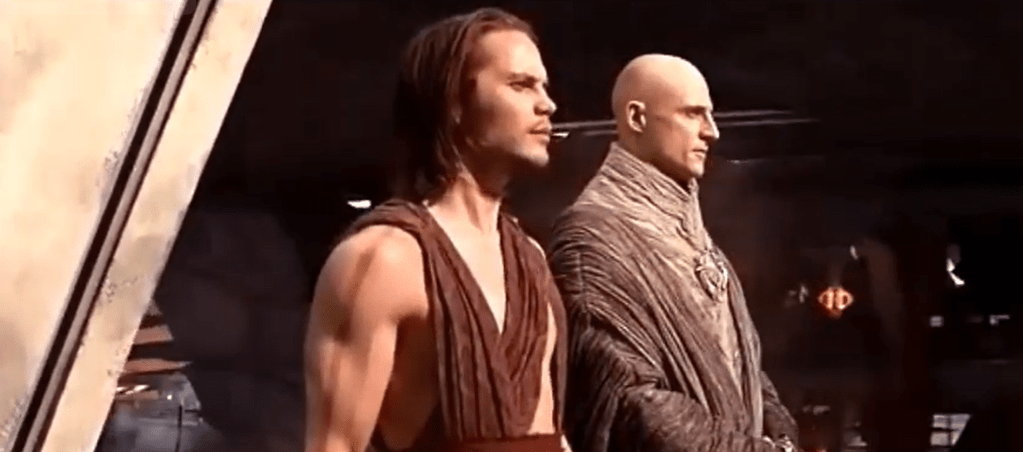
The film’s hero, John Carter, is a 19th-century soldier transported to Mars, where he finds himself caught in a planetary war. He soon learns the conflict is being secretly manipulated by the Therns, a race of immortal beings who steer the fate of entire worlds across the universe.
Buried within its Martian landscape and epic battles is a chilling piece of dialogue that, once heard, is impossible to forget. The hero, John Carter, confronts the mysterious and seemingly omnipotent beings pulling the strings of the planet’s fate, and their explanation for their actions serves as a terrifyingly accurate allegory for the invisible forces shaping our own world.
————————————————————————————————————————-
Here is that exchange of words between John Carter and Thern (immortal being)
————————————————————————————————————————-
John Carter: So what is your cause?
————-
Thern: We have none. We’re not haunted by mortality as you are. We are eternal.
——-
John Carter: I don’t understand. The wedding, this little stroll. Why not just kill me, kill Dejah?
————–
Thern: History will follow the course we have set, Earthman. And we’ve chosen Sab Than to rule next. The Ninth Ray must remain in the hands of mindless brutes we can control.
And the infamy of Dejah Thoris’s wedding death will seal his reign.
We’ve been playing this game since before the birth of this planet (Mars). And we’ll continue to do so, long after the death of yours (Earth).
We don’t cause the destruction of a world, Captain Carter.
We simply manage it, feed off it, if you like.
But on every host planet, it always plays out exactly the same way.
Populations rise, societies divide, wars spread. And all the while the neglected planet slowly fades.
————————————————————————————————————————-
This dialogue is more than just villainous exposition. It’s a blueprint for a kind of systemic, impersonal evil that thrives not on outright destruction, but on the management of decline.
Let’s break down how these words reflect disturbing patterns in our own history and present reality.
1. The “Eternal” Beings: The System Itself
The first step is to understand who these “eternal” beings represent in our world. They are not literal immortals hiding in the shadows. They are the systems, institutions, and ideologies that have a life of their own—entities that outlive any single human and operate on a cold, internal logic that is often detached from human well-being.
Transnational Corporation
Think of a transnational corporation. Many have existed for over a century, far longer than their founders or any CEO. Their legal and primary directive is not to care for a community or a nation, but to generate profit and growth for shareholders. Like the beings in the dialogue, a corporation has no “cause” beyond its own propagation.
Transnational Corporations can exploit a country’s low wages and lax environmental laws, “feeding off” its resources, and if that “host planet” (host country) begins to fade due to pollution or social unrest, the corporation can simply move its operations elsewhere, leaving the consequences behind.
Global Capitalism
Consider global capitalism as an ideology. It functions as an eternal force driving toward perpetual expansion and capital accumulation. It doesn’t have a conscience or a moral compass; it has a mechanism. While this mechanism can spur incredible innovation, it also inherently encourages the over-consumption of resources (the “neglected planet”) and can create vast wealth inequality, which helps to ensure that “societies divide.”
Geopolitical Empires and Blocs
Finally, look at geopolitical empires and blocs. From the Roman Empire to the British Empire to modern superpowers, these entities operate on strategic timelines that dwarf individual human lives. Their foreign policy is designed to maintain and expand their own influence.
Geopolitical Empires and Blocs have been “playing this game” for centuries, managing spheres of influence, securing resources, and ensuring the global board is arranged to their advantage, often with little regard for the autonomy or prosperity of the nations they influence.
2. “We Don’t Cause Destruction… We Simply Manage It.”
This is the most haunting and insightful line in the entire exchange. It describes a form of parasitic profiteering that is far more insidious than simple villainy. It is the art of benefiting from chaos without having to start it.
Military Industrial Complex
The most potent real-world example is the military-industrial complex. Defense contractors, arms manufacturers, and private military firms do not necessarily start wars. However, their business models are fundamentally dependent on the existence and continuation of conflict. “Wars spread” is not a tragedy for them; it is a business opportunity.
Military Industrial Complex can supply weapons, technology, and “security solutions” to all sides, “managing” the conflict and reaping enormous profits from the bloodshed and destruction.
They are the ultimate managers of destruction.
Disaster Capitalism
Another powerful parallel is what author Naomi Klein termed “disaster capitalism.” This is the strategy of using large-scale crises—wars, terrorist attacks, economic collapses, pandemics, and natural disasters—to push through radical pro-corporate policies.
The architects of this strategy don’t cause the hurricane or the earthquake, but they arrive in its aftermath to “manage” the reconstruction by privatizing public schools, utilities, and other state assets.
They “feed off” the tragedy, ensuring that the recovery benefits a select few while the affected population is too disoriented to resist.
3. “The Ninth Ray Must Remain in the Hands of Mindless Brutes We Can Control.”
This is a nakedly honest description of installing and maintaining puppet leaders to control a valuable resource. The “Ninth Ray” is the movie’s MacGuffin, a source of immense power.
In our world, the Ninth Ray has taken many forms: oil, diamonds, lithium, cobalt, rubber, strategically important shipping lanes, or even data.
This strategy is the cornerstone of colonialism and neo-colonialism. For centuries, colonial powers would prop up or install compliant local rulers—the “mindless brutes we can control”—who would guarantee them access to the nation’s resources. If a democratically elected leader dared to nationalize their own country’s oil fields or mines, they were often overthrown in coups backed by foreign powers, who would then install a more “business-friendly” dictator.
This game continues today. Superpowers often turn a blind eye to the human rights abuses of authoritarian regimes in exchange for stable access to oil, military basing rights, or cooperation on intelligence.
The goal is not the flourishing of that nation’s people; it is the predictable and uninterrupted control of the “Ninth Ray” (Resources).
The stability of the system is prioritized over the justice of its outcomes.
4. The Inevitable Cycle: A Planet Fading in Plain Sight
The dialogue ends with a grim prophecy that feels all too familiar: “Populations rise, societies divide, wars spread. And all the while the neglected planet slowly fades.” This describes a feedback loop of societal decay where internal conflict distracts from existential threats.
Political Polarization and Social Division
Political polarization and social division are actively managed and monetized in our world. Social media algorithms and partisan news outlets have discovered that outrage, fear, and tribalism are highly engaging. By creating echo chambers and amplifying conflict, they keep users hooked.
Social Media Platforms platforms don’t necessarily create the initial seeds of division, but they expertly “manage” and “feed off” it, making civil discourse and collective action nearly impossible.
As “societies divide” into warring factions, our ability to address monumental challenges weakens.
Climate Change
And all the while, the neglected planet slowly fades. Climate change is the ultimate consequence of this dynamic. Our global economic system, which “feeds off” fossil fuels and endless consumption, is directly causing the planet to warm. Our political systems, paralyzed by division and short-term thinking, are unable to mount a sufficient response.
The eternal systems of capital and power are not designed to solve a problem whose timeline extends beyond the next election cycle or quarterly earnings report.
They continue to manage their own interests while the foundation of our existence—a stable climate—erodes beneath our feet.
Conclusion
The horror of the villains in John Carter is not that they are evil, but that they are indifferent. They are not agents of chaos; they are managers of a predictable decline that serves their interests. This is the perfect metaphor for the impersonal, systemic forces that govern our world.
- A corporation isn’t “evil,” but it is legally obligated to pursue profit, even at the cost of the environment.
- A political system isn’t “evil,” but it incentivizes partisan conflict over long-term, collective problem-solving.
Final Warning
The script’s final warning is the most critical:
Civilizations are not always conquered by an invading army. More often, they are managed into self-destruction. They are guided toward a state where the populace is so consumed by internal division and immediate conflict that they fail to notice that their world, their society, and their future are slowly fading away.
 In the Pursuit of excellence
Leave a comment